

You can review CEVAN mini tractors, attachments and power transmission solutions or get direct technical information.
Can a Mini Tractor Tip Over on a Slope? Safe Operation on Sloping Terrain
Can a mini tractor climb a hill? Is there a risk of rollover when working on sloping ground? These are among the most common questions asked by people considering a small tractor or garden tractor.
A mini tractor’s performance on slopes does not depend on engine power alone. The engine supplies the power needed to move the tractor, but safe operation on sloping and uneven terrain also requires the stability system, braking system, track width, wheelbase, differential, four-wheel drive, and correct driving technique to be considered together.
CEVAN mini tractors are developed for work in vineyards, gardens, greenhouses, small fields, and uneven terrain. The rough-terrain stability system, hydraulic braking system, true differential, and full-time 4×4 traction system contribute to more controlled operation in varying ground conditions.
This guide explains how mini tractors can be operated more safely on slopes and rough ground, the mistakes that increase rollover risk, and the operating principle of CEVAN’s dedicated stability system.
Why Can a Mini Tractor Tip Over on a Slope?
A mini tractor rollover is usually not caused by a single factor. The slope of the terrain, tractor design, driving speed, track width, center of gravity, and the load being carried all play a part.
The main situations that can increase rollover risk include:
- Turning suddenly on a slope
- Traveling quickly across a side slope
- Piling the trailer load on one side
- Pulling a load heavier than the tractor’s capacity
- Driving too fast on rocky, rutted, or slippery ground
- Shifting into neutral while descending
- Using an unsuitable gear
- Failing to check tire pressures and the braking system
- Ignoring the weight of attached equipment
When traveling across a slope, the tractor’s weight shifts toward the downhill wheels. If an uphill wheel climbs onto a rock or a downhill wheel drops into a hole, the body angle can increase. A sudden steering input or hard braking at that moment can further disturb the tractor’s balance.
For this reason, asking only “How much horsepower does the tractor have?” is not enough on sloping terrain. What matters is that engine power is combined with a safe chassis, an effective braking system, and a stability structure capable of adapting to the terrain.
How Does CEVAN’s Rough-Terrain Stability System Work?
On uneven terrain, all four wheels do not always travel at the same height. One wheel may climb over a rock or mound while another remains lower.
In a rigid structure that cannot adapt to the terrain, a change in wheel height may be transmitted directly to the chassis. For example, when the right rear wheel climbs onto a rock, the right side of the body may also rise. The chassis can then lean sideways and the weight can shift toward the opposite side.
The dedicated stability system used on CEVAN mini tractors helps the wheels adapt to different ground levels.
When the right rear wheel climbs onto a rock, the wheel moves upward. The stability system reduces how much of that movement is transmitted directly to the chassis. As the wheel rises, the tractor chassis can therefore remain as level and stable as possible.
The same operating principle applies to the other wheels. When a wheel rises or drops, the system helps accommodate the difference in ground level within its range of movement.
In simple terms:
While the wheels follow the shape of the ground, the tractor chassis remains as stable as possible.
This feature provides an important advantage in rocky gardens, rough field roads, and uneven ground with mounds and depressions.
What Happens When One Wheel Climbs over a Rock?
CEVAN’s stability system can be explained with a simple example:
- The right rear wheel climbs onto a rock.
- The wheel moves upward according to the height of the rock.
- The stability system helps accommodate the difference in ground level.
- The wheel’s entire upward movement is not transmitted directly to the chassis.
- The chassis does not lean sideways by the same amount as the wheel rises.
- The tractor continues moving with greater stability.
A similar process occurs when one wheel drops into a hole. As the wheel follows the ground, the stability system helps reduce sudden movement of the chassis.
This means the body of the CEVAN mini tractor does not have to lean sharply to the right or left with every rock and mound on rough ground.
What Advantages Does the Stability System Provide?
CEVAN’s stability system, developed for uneven terrain, helps to:
- Reduce sudden sideways leaning of the chassis
- Allow the wheels to follow rocky, rutted, and uneven ground
- Support continued contact between all four wheels and the ground
- Limit sudden transfer of weight to one side
- Reduce the movement transmitted from rough ground to the chassis
- Support the operator’s ability to maintain steering control
- Help the four-wheel-drive system use available traction more effectively
- Support more stable and controlled travel over uneven terrain
However, a stability system does not make a tractor impossible to roll over. Excessive slopes, high speed, sudden turns, incorrect loading, and large holes can be dangerous for any tractor.
Why Is Track Width Important?
The distance between the centers of the right and left wheels is called the track width. It is also commonly described as the spacing between the wheels.
Small vehicles whose wheels are very close together have a narrower footprint. This can make the body more likely to lean sideways, particularly when traveling across a slope.
A chair provides a simple comparison. A chair with its legs very close together can tip sideways more easily than one with its legs spaced appropriately.
The track width of CEVAN mini tractors is determined with the intended use and overall body balance in mind. A suitable track width helps the tractor stand more evenly on the ground.
Track width alone is not sufficient, however. The position of the center of gravity, chassis design, wheelbase, tires, carried load, and attached equipment also affect stability.
What Is Wheelbase and How Does It Affect Stability?
Wheelbase is the longitudinal distance between the front and rear axles. It should not be confused with the track width between the right and left wheels.
A wheelbase suited to the tractor’s intended use helps to:
- Maintain front-to-rear weight distribution
- Keep the tractor more stable during braking
- Support balance when a trailer or implement is attached
- Provide more controlled travel on rough ground
Together, these points support stable operation.
Very short and poorly balanced designs can produce more abrupt forward or rearward weight transfer. When choosing a mini tractor, small tractor, or garden tractor, the exterior dimensions should therefore not be the only consideration. The chassis proportions and wheelbase must also be examined.
Why Is a Hydraulic Braking System Important on Slopes?
Being able to stop in a controlled manner and descend safely is just as important as being able to climb a hill.
Some vehicles based on power-tiller drivetrains may not have an independent, true tractor braking system. Driving control can be limited in such designs, especially when descending with a trailer.
The hydraulic braking system used on CEVAN mini tractors helps apply braking force in a controlled manner. This allows the operator to slow down and stop more progressively on sloping terrain.
A powerful braking system cannot eliminate every danger created by incorrect operation. Excessive speed, the wrong gear, a heavy trailer, and slippery ground can still create risks on a tractor equipped with hydraulic brakes.
When descending a slope:
- Reduce speed before entering the slope.
- Select a suitable low gear in advance.
- Do not shift the tractor into neutral.
- Avoid sudden, hard braking.
- Do not allow the trailer to push the tractor uncontrollably.
- Do not attempt to change gear while on the slope.
What Does a True Differential Do?
When a tractor turns, the inside and outside wheels do not travel the same distance. The outside wheel follows a longer path.
A true differential allows the right and left wheels to rotate at the different speeds they require during a turn.
This system helps to:
- Provide more controlled turning
- Reduce unnecessary tire scrubbing
- Reduce strain on driveline components
- Improve maneuverability
- Make movement easier between narrow vineyard and garden rows
Together, these functions support controlled operation.
CEVAN’s differential system shows that the small tractor was not designed simply to travel in a straight line; turning, driving, and terrain control were considered in its development.
Does 4×4 Traction Make Every Slope Safe?
A four-wheel-drive system transfers engine power to the front and rear wheels. This helps maintain traction on loose soil, mud, rocky ground, and slopes.
However, a 4×4 traction system and a stability system are not the same thing.
- The 4×4 traction system helps the tractor move forward and the tires grip the ground.
- The stability system helps the wheels adapt to different ground levels.
- The differential system enables controlled turning.
- The hydraulic braking system contributes to slowing and stopping control.
- Appropriate chassis dimensions support the tractor’s overall balance.
These systems work together to create the terrain capability of CEVAN mini tractors. Even so, no 4×4 mini tractor can be used safely on every slope merely because it has four-wheel drive.
What Should Be Considered When Towing a Trailer on a Slope?
When a trailer is attached, the movement of the trailer and its load must be controlled in addition to the tractor’s own weight.
Incorrect load placement can upset the tractor’s balance. Placing a heavy load at the rear of the trailer or piling it on one side can cause dangerous weight shifts during operation.
The trailer load must:
- Be distributed evenly between the right and left sides
- Be kept as low as possible
- Be secured so that it cannot move
- Remain within the trailer’s carrying capacity
- Not make the front of the tractor excessively light
- Be appropriate for the slope and ground conditions
A heavy trailer can push the tractor forward while descending. Speed and gear must therefore be selected before entering the slope.
How Should a Turn Be Made on a Slope?
A sudden turn on a side slope or hillside can transfer weight to one side very quickly. Turns should therefore be made as widely, slowly, and smoothly as possible.
On sloping terrain:
- Avoid sudden steering inputs.
- Do not turn at high speed.
- Check the turning area in advance.
- Do not turn where there are rocks, holes, or mounds.
- Account for the movement of attached equipment during the turn.
- Choose a safer, more level turning point whenever possible.
On an articulated mini tractor, remember that the front and rear sections move in different directions during a turn. The operator must assess the turning area and the path that the attached implement will follow before starting the maneuver.
How Should the Tractor Be Operated on Slippery or Muddy Ground?
Wet soil, mud, loose gravel, and wet grass can reduce tire grip. Having 4×4 traction does not completely eliminate the risk of sliding.
On slippery ground:
- Keep speed as low as possible.
- Do not apply the throttle suddenly.
- Avoid sudden braking and sharp turns.
- Use suitable tires.
- Check tire condition and inflation pressure.
- Do not enter a slope that is unsafe.
- Inspect the route before starting work.
Applying more throttle when the wheels begin to spin is not always the correct response. Excessive throttle can damage the ground further and cause the tractor to slide sideways.
What Not to Do on Sloping Terrain
Avoid the following mistakes when operating a mini garden tractor or small field tractor:
- Coasting downhill in neutral
- Traveling at high speed
- Turning suddenly on a slope
- Applying the brakes abruptly and forcefully
- Piling the trailer load on one side
- Exceeding the tractor’s towing capacity
- Entering a slope known to be unsafe
- Driving quickly over rocks and holes
- Working without checking the tires and brakes
- Ignoring the weight of attached equipment
- Carrying children or passengers
- Operating the tractor under the influence of alcohol, while fatigued, or while distracted
Quick Safety Check Before Starting Work
Before entering sloping or uneven terrain, check the following:
- Is the hydraulic braking system operating correctly?
- Are the tires sound and inflated to the correct pressure?
- Is there any play in the steering or connection points?
- Is there mud, loose soil, a large rock, or a hidden hole on the ground?
- Is the trailer connection correct and secure?
- Has the load been distributed evenly and secured?
- Has the intended route been inspected?
- Is there enough room at the turning point?
- Is the attached equipment secured safely?
- Are the weather and ground conditions suitable for work?
Do not begin work if any of these checks reveals a problem or raises a concern.
The Difference Between a Power-Tiller-Based Vehicle and a True Mini Tractor
In Türkiye, terms such as “mini tractor,” “small tractor,” and “garden tractor” may be used for machines with very different designs. Not every small-looking vehicle has the same technical features.
Some vehicles are created mainly by adding a seat to the engine and driveline of a power tiller. These machines may lack a true differential, hydraulic brakes, a terrain stability system, or chassis proportions suited to tractor operation.
CEVAN mini tractors, by contrast, are developed with true tractor operating principles in mind.
The main CEVAN features that support terrain operation are:
- A dedicated stability system developed for rough terrain
- A hydraulic braking system
- A true differential
- A full-time 4×4 traction system
- A wheelbase suited to the intended use
- Balanced track width
- A chassis designed for terrain operation
- A connection system suitable for trailers and agricultural equipment
The purpose of these features is not merely to enable the tractor to climb a hill. Driving, traction, turning, braking, and adaptation to uneven ground were considered together.
Why Does a CEVAN Mini Tractor Adapt Better to Uneven Terrain?
CEVAN’s terrain capability does not depend on a single component or on engine power alone.
The dedicated stability system helps the wheels adapt to different ground levels. The four-wheel-drive system transfers engine power to the front and rear wheels. The true differential allows the tractor to turn in a controlled manner. The hydraulic braking system contributes to slowing and stopping control.
When these systems work together, the tractor can:
- Follow uneven ground more effectively
- Maintain contact between all four wheels and the ground more effectively
- Keep the chassis more stable when crossing rocks and mounds
- Turn more controllably in narrow areas
- Reduce speed more controllably on sloping ground
- Transfer engine power to the ground more effectively
When choosing a true mini tractor, horsepower and price should therefore not be the only points compared. The stability system, braking structure, differential, traction system, and chassis dimensions should also be examined.
Can a Mini Tractor Tip Over on a Slope?
Any tractor can roll over if it is operated incorrectly or used in unsuitable terrain conditions. No stability, braking, or 4×4 traction system can eliminate rollover risk completely.
Features such as a terrain-adaptive stability system, suitable track width, correct wheelbase, hydraulic brakes, and a true differential can nevertheless help a tractor move with greater stability and control when combined with correct operation.
When one wheel rises or drops, CEVAN’s dedicated stability system reduces how much of that difference in height is transmitted to the chassis. As the wheels follow uneven ground, the tractor body can therefore remain as stable as possible.
Conclusion
A mini tractor’s performance on slopes cannot be measured by engine power alone. A powerful engine can move the tractor, but controlled operation on sloping and uneven terrain also requires stability, braking, a differential, four-wheel drive, an appropriate wheelbase, and suitable track width.
CEVAN mini tractors are developed not merely as small agricultural vehicles, but according to true tractor operating principles. The rough-terrain stability system allows the wheels to adapt to different ground levels while keeping the chassis as stable as possible. Hydraulic brakes, a true differential, and full-time 4×4 traction also support driving control.
The operator remains the most important element of safety. Inspect the terrain in advance, position the load correctly, keep speed low, and always operate the tractor within its technical limits.
Review the technical specifications of CEVAN mini tractor models to identify the model suited to your terrain, work, and equipment.
Model seçimi ve teknik bilgi için doğrudan üreticiyle görüşün
Mini traktör, ataşman, trailer veya şanzıman ihtiyacınız varsa kullanım areaınızı bize iletin; size uygun product, ekipman compatibility ve delivery süreci için net bilgi verelim.
Products related to this guide
You can review CEVAN products suitable for the topic explained in this article.
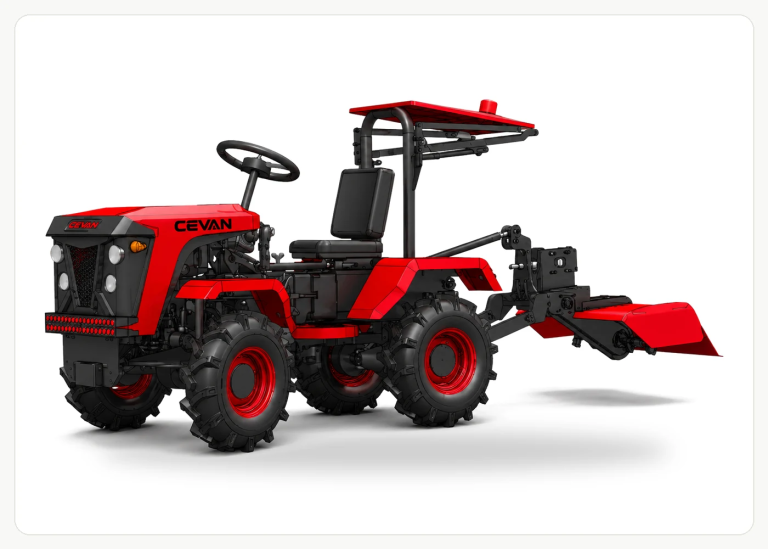
CEVAN 18 HP Gasoline Belden Kırmalı Mini Traktör
CEVAN CEVAN 18 HP Gasoline Belden Kırmalı Mini Traktör is designed for compact agricultural work,…
Productü View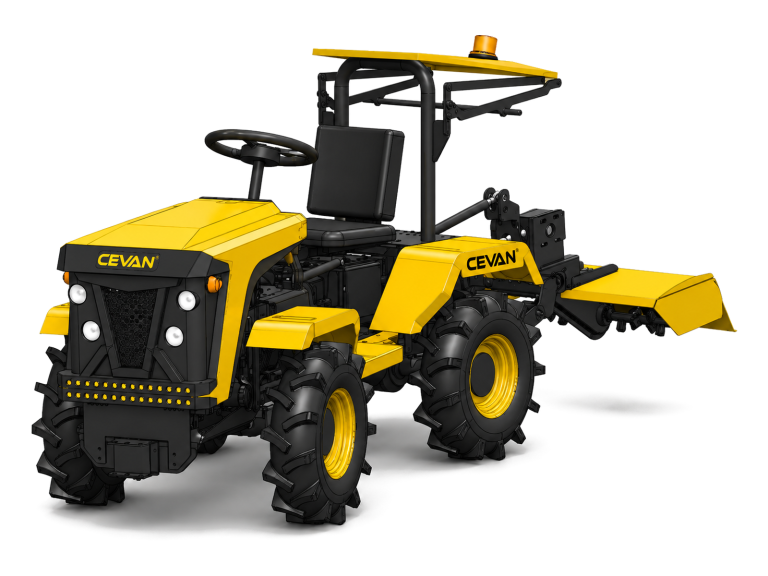
CEVAN C220D Articulated Mini Tractor
CEVAN C220D is a diesel articulated mini tractor developed for gardens, vineyards and compact agricultural…
Productü View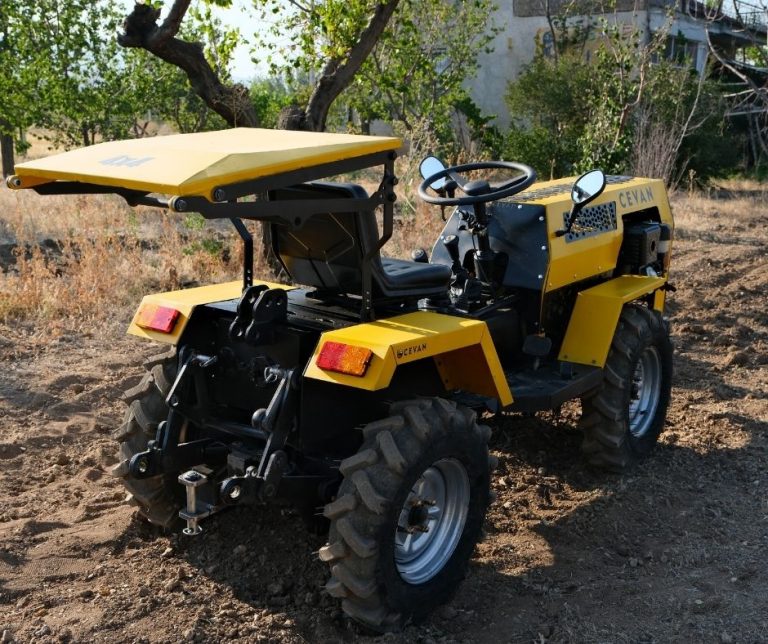
CEVAN 24 HP Gasoline Belden Kırma Mini Traktör
CEVAN CEVAN 24 HP Gasoline Belden Kırma Mini Traktör is designed for compact agricultural work,…
Productü View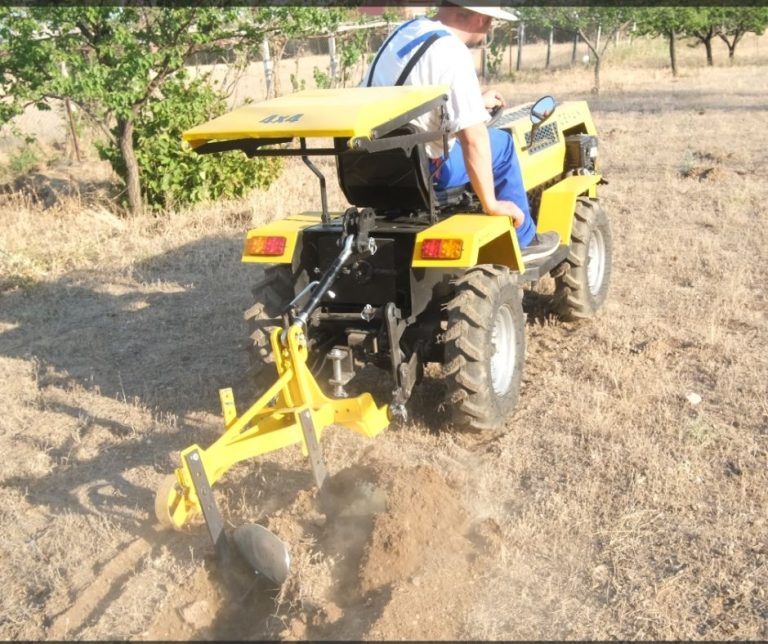
CEVAN 22 HP Gasoline Belden Kırmalı Mini Traktör
CEVAN CEVAN 22 HP Gasoline Belden Kırmalı Mini Traktör is designed for compact agricultural work,…
Productü Viewİlgili product grupları
Yazıdan sonra ihtiyacınıza uygun product kategorforwardne geçiş yapın.
CEVAN productlerini bölgenizde satmak ister misiniz?
Mini traktör, ataşman ve güç aktarma çözümlerimiz için bayi başvurusu yapabilir, satış ve teknik destek sürecini birlikte planlayabilirsiniz.